
News
Ologbotsere Controversy: Olu of Warri Reaffirms Oma Eyewuoma, Leaves Ayiri’s Claim in Limbo

By Johnson Oghenekome Jephthah
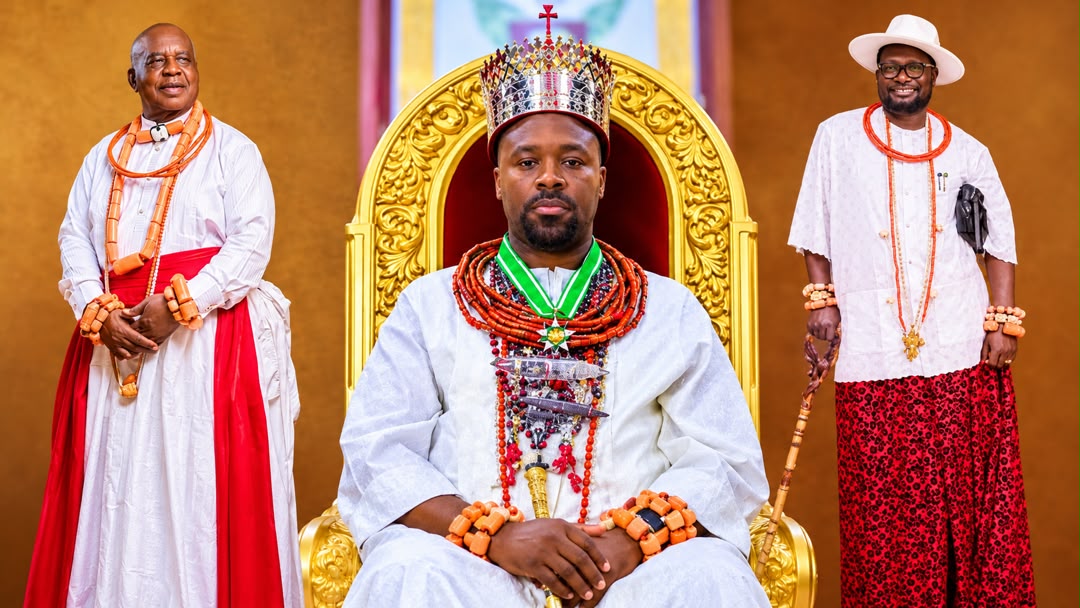
The longstanding controversy surrounding the revered Ologbotsere title in the Warri Kingdom has taken another significant turn following the reported reaffirmation of Chief Oma Eyewuoma as the holder of the title by the Olu of Warri, Ogiame Atuwatse III.
The monarch’s declaration, reportedly made on Thursday, November 19, 2026, after a traditional consultation with the Ifẹ́ oracle at his palace in Ode-Itsekiri, appears to reinforce the palace’s position on a chieftaincy dispute that has generated considerable tension, debate and uncertainty within the Itsekiri Kingdom for years.
At an enlarged gathering at the palace amphitheatre, the Olu reportedly disclosed that both Chief Oma Eyewuoma and former Ologbotsere, Chief Ayirimi Emami, had been invited to the consultation. However, Emami reportedly did not attend, while the outcome of the consultation maintained Eyewuoma’s position as Ologbotsere.
The monarch’s latest pronouncement is understood to have become necessary amid growing rumours and speculation among Itsekiris that he might have reversed his earlier decision recognising Eyewuoma as the holder of the title.
A Title at the Centre of a Royal Controversy
The Ologbotsere title occupies a prominent place in the traditional hierarchy of the Warri Kingdom. Historically associated with considerable influence in the administration of the kingdom and palace affairs, the office is widely regarded as one of the most prestigious traditional positions in Itsekiri society.
The controversy intensified in October 2021, following a pronouncement by the Olu of Warri that effectively stripped Ayiri Emami of the title and declared that the position should no longer be paraded.
The decision generated considerable disagreement, particularly among Emami’s supporters and sections of the Ologbotsere family, who questioned the circumstances surrounding the removal and maintained their positions on the historical legitimacy of the title.
In April 2023, the monarch installed Chief Oma Eyewuoma as the new Ologbotsere, in what appeared to be an attempt to restore clarity to the disputed office and establish a new direction for the traditional institution.
However, the installation did not immediately bring an end to the controversy.
Ayiri Emami’s Position and the Unresolved Disagreement
Ayiri Emami reportedly rejected the development and maintained that he remained the rightful Ologbotsere. He was also reported to have declined an alternative traditional title, Eyeku, which the Olu reportedly offered during efforts to reconcile the parties.
The disagreement subsequently evolved beyond a simple question of who occupied the title, becoming a broader debate over traditional authority, succession, the powers of the Olu and the historical significance of the Ologbotsere institution.
Although reconciliation efforts were reportedly made, the controversy persisted, with competing positions continuing to generate discussions within Itsekiri circles.
The Significance of the Ifẹ́ Consultation
The latest consultation with the Ifẹ́ oracle introduces another dimension to the dispute, drawing on traditional spiritual authority to reinforce the palace’s position.
For many within the Itsekiri traditional system, consultations with ancestral institutions and oracles carry cultural and spiritual significance. The reported outcome, therefore, may strengthen the acceptance of Eyewuoma’s position among those who recognise the authority of the consultation.
Nevertheless, the development does not necessarily mean that all parties involved have accepted the decision. The position of Ayiri Emami and other stakeholders following the latest pronouncement remains crucial to determining whether the controversy will finally subside.
A Test of Traditional Authority and Unity
Beyond the personalities involved, the Ologbotsere controversy raises broader questions about the preservation of traditional institutions, the exercise of royal authority and the need for unity within the Warri Kingdom.
The Olu’s reaffirmation of Oma Eyewuoma appears to communicate that the palace considers its position on the title unchanged. It also underscores the monarch’s determination to address lingering uncertainty surrounding one of the kingdom’s most prominent traditional offices.
As the development unfolds, attention will remain on the reactions of the affected parties and the wider Itsekiri community.
For now, Chief Oma Eyewuoma remains the Ologbotsere recognised by the palace of Ogiame Atuwatse III, while the years-long dispute surrounding the title continues to await a resolution capable of commanding lasting acceptance across the kingdom.
The question remains: will the latest royal pronouncement finally bring an end to the Ologbotsere controversy, or will the dispute continue to test the unity of the Warri Kingdom?