News
2027 BUDGET: HOW OBOREVWORI’S N1.23TRN PROPOSAL COULD BENEFIT DELTANS

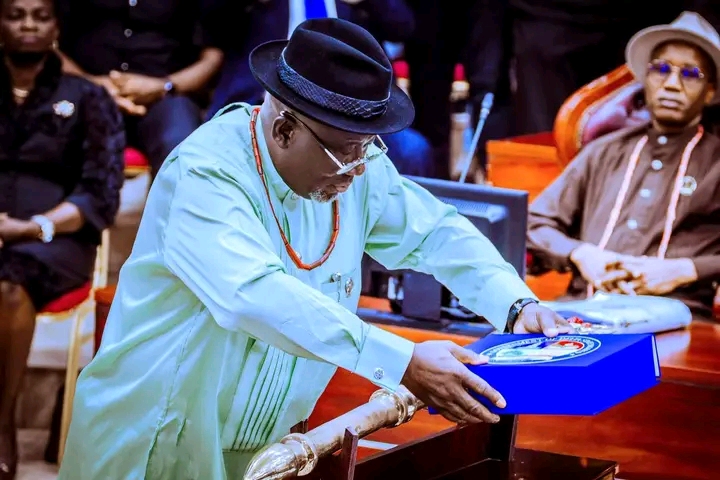
Delta State Governor, Rt. Hon. Sheriff Oborevwori, has presented a proposed N1.23 trillion budget for 2027, with 65 per cent earmarked for capital expenditure, in a move that could deliver significant benefits to residents across the state if effectively implemented.
Tagged Budget of Sustained Prosperity and Enhanced Growth, the proposal allocates N806.8 billion to capital projects and N430 billion to recurrent expenditure, with priority attention to infrastructure, education, healthcare, agriculture, energy, security and economic diversification.
Beyond the impressive budget figures, the critical question for ordinary Deltans is how the proposed spending will translate into better roads, improved public services, employment opportunities, accessible healthcare and enhanced living conditions.
An examination of the proposed allocations reveals several areas through which residents could benefit.
1. Improved Road Infrastructure and Rural Connectivity
One of the biggest potential benefits of the 2027 budget is the proposed N320 billion allocation to the two Ministries of Works.
The allocation is expected to sustain ongoing road construction projects and facilitate the completion of existing infrastructure.
With the administration reporting 872 road projects, 20 bridges and flyovers, covering 2,348 kilometres of roads and 1,871 kilometres of drainage infrastructure, sustained investment could improve connectivity between communities, reduce transportation difficulties and enhance commercial activities.
For farmers, traders, commuters and business owners, improved road networks could mean easier movement of agricultural produce, reduced transportation costs and better access to markets.
Rural and riverine communities, which have consistently demanded improved roads, bridges and jetties, could particularly benefit from the administration’s infrastructure priorities.
2. Better Educational Opportunities for Students
The proposed N74 billion allocation to education is another significant component of the budget.
The breakdown includes N10 billion for primary education, N12 billion for technical education, N12 billion for secondary education and N40 billion for higher education.
These investments could improve learning conditions, strengthen technical and vocational training, support tertiary institutions and expand opportunities for young people.
The government’s commitment to school rehabilitation, teacher development, digital learning, laboratory facilities and academic accreditation could also improve the quality of education across the state.
Additionally, the N10.8 billion approved for the rehabilitation and renovation of primary and secondary schools is expected to contribute to providing a more conducive learning environment for pupils and students.
For parents, improved educational infrastructure could reduce some of the challenges associated with inadequate learning facilities, while students could benefit from better-equipped classrooms and laboratories.
3. Improved Healthcare Delivery
The proposed N50 billion allocation to healthcare is expected to support hospital upgrades, medical supplies, recruitment and improved welfare for healthcare workers.
If properly utilised, the investment could improve the availability of medical services, strengthen healthcare facilities and reduce the burden on residents seeking quality medical attention.
The government’s emphasis on manpower development is also reflected in the College of Health Technology, Ovrode, which has enrolled more than 800 pioneer students.
The institution could contribute to producing more healthcare professionals to address manpower shortages in the state’s health sector.
Ultimately, improved healthcare investment could translate into better medical attention, stronger public health services and improved access to healthcare for families, particularly in underserved communities.
4. Employment Opportunities and Economic Growth
The administration’s economic diversification agenda could create additional employment opportunities for young people and other residents.
Its proposed support for agriculture, industrialisation, entertainment and small and medium-scale enterprises is aimed at expanding economic activities beyond traditional sources of revenue.
A notable example is the $70 million Olam Agri feed mill project at Ogwashi-Uku, which the governor identified as an outcome of the 2026 Delta State Economic and Investment Summit.
The project is expected to create employment opportunities and provide a ready market for locally produced agricultural commodities.
This could benefit farmers, agricultural entrepreneurs, transport operators, suppliers and other businesses connected to the agricultural value chain.
If similar investments are attracted across the state, they could stimulate local production, encourage entrepreneurship and improve household incomes.
5. Improved Electricity and Community Security
The proposed N12 billion allocation to energy could support efforts to improve electricity infrastructure and expand access to reliable power.
The governor disclosed that his administration had executed 2,155 energy projects, including 90 transformers, 2,003 solar street-lighting projects and 23 power-grid extensions.
Continued investment in this area could benefit households, small businesses, markets, schools and healthcare facilities.
Improved electricity supply could reduce dependence on expensive alternative power sources, enhance business productivity and support economic activities.
The expansion of solar street lighting could also improve visibility in communities and contribute to safer public spaces.
6. Better Welfare for Civil Servants
One of the most direct benefits announced by the governor is the approval of the 13th-month salary for public servants, commencing in December 2026.
The initiative is expected to provide additional financial support to workers during the festive season.
For civil servants and their families, the additional payment could help meet household expenses, settle financial obligations and improve purchasing power.
Beyond the immediate financial benefit, the initiative could boost workers’ morale and demonstrate recognition of their contributions to public service.
7. Improved Security and Protection of Lives and Property
Security remains essential to economic activities and the wellbeing of residents. The governor disclosed that approval had been given for the construction of 25 police divisional headquarters for state police, alongside an application to recruit 1,000 forest guards.
The proposed initiatives are intended to strengthen security operations and address challenges including kidnapping, cultism, pipeline vandalism and other criminal activities.
If successfully implemented, the measures could improve security coverage, strengthen community policing and create a safer environment for businesses, farmers, traders and residents.
Improved security could also encourage investment and economic activities across the state.
8. Development of Warri, Uvwie and the State Capital
The proposed N20 billion allocation to the Warri-Uvwie and Environs Development Agency and another N20 billion to the Delta State Capital Territory Development Agency could support urban development and infrastructure improvement.
Residents and businesses in these areas could benefit from improved urban infrastructure, better environmental management and enhanced public facilities, depending on the projects eventually executed.
The allocations also underscore the administration’s intention to sustain development in major urban centres.
9. Support for Agriculture and Social Interventions
The proposed N5 billion allocation to agriculture and another N5 billion for social interventions could provide opportunities to strengthen food production and support vulnerable residents.
Investment in agriculture could encourage local production, support farmers and strengthen the agricultural value chain.
Similarly, social intervention programmes could provide assistance to disadvantaged households and other groups requiring government support.
These interventions, if effectively targeted, could contribute to poverty reduction and improved living conditions.
10. Stronger State Revenue and Sustainable Development
The governor disclosed that Delta’s Internally Generated Revenue increased from N83 billion in 2023 to a projected N283 billion by December 2026.
He attributed the growth to technology-driven revenue collection, an expanded revenue base and efforts to eliminate revenue leakages without imposing additional tax burdens.
He also disclosed that N400 billion of the N463 billion legacy debt had been repaid, leaving N63 billion outstanding, which he expects to clear by the end of the first quarter of 2027.
For residents, improved revenue generation and reduced debt obligations could create greater fiscal space for infrastructure, social services and other development priorities.
However, the real benefit will depend on how effectively additional revenue is translated into tangible public services.
Implementation and Accountability
While the proposed 2027 budget presents several opportunities for improved living conditions, the actual benefits to Deltans will ultimately depend on effective implementation, transparency and accountability.
The proposed N1.23 trillion expenditure must translate into completed roads, functional hospitals, equipped schools, improved electricity, accessible security services and sustainable employment opportunities.
It is equally important that rural communities, riverine settlements, urban centres and economically disadvantaged residents feel the impact of government spending.
The 65 per cent capital expenditure allocation is particularly significant because capital projects have the potential to create lasting public assets and stimulate economic activities.
Nevertheless, Deltans will be looking beyond budget presentations to demand measurable results, timely project completion and equitable distribution of development projects.
Conclusion
Governor Oborevwori’s proposed 2027 Budget of Sustained Prosperity and Enhanced Growth offers a broad development framework that, if successfully implemented, could improve the welfare of residents across Delta State.
From improved road connectivity and educational opportunities to better healthcare, employment generation, workers’ welfare and community security, the proposed spending touches several areas of everyday life.
For ordinary Deltans, however, the true measure of the budget will not be the size of its figures but the visible improvements it delivers to their communities, businesses, families and livelihoods.
As the Delta State House of Assembly begins consideration of the Appropriation Bill, expectations will be high that the proposed investments will move beyond policy promises to tangible benefits for the people.