News
The Many Troubles of Hope Uzodimma: From Okorocha’s Legal Battle to the Senate Presidency Power Struggle

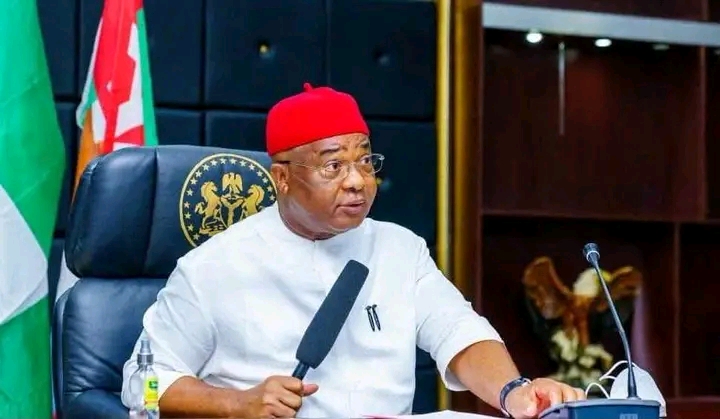
For Imo State Governor Hope Uzodimma, the road to the 2027 general elections is becoming increasingly complicated. What began as an ambition to return to the National Assembly after completing his tenure as governor has evolved into a multifaceted political contest involving a former governor, a battle for the leadership of the 11th Senate, and disagreements with some of the most influential figures in Nigeria’s political establishment.
At the centre of the unfolding drama are former Imo State Governor Rochas Okorocha, Senate President Godswill Akpabio and Federal Capital Territory Minister Nyesom Wike.
The immediate controversy is the legal battle over the All Progressives Congress (APC) senatorial ticket for Imo West, where Okorocha is challenging Uzodimma’s emergence as the party’s candidate for the 2027 election.
Beyond the dispute over the ticket, however, lies a larger question: Is Uzodimma’s ambition to remain politically relevant after his governorship putting him on a collision course with powerful political interests?
Recent developments suggest that the governor faces several challenges, although their ultimate consequences will depend on the outcome of the legal proceedings, negotiations within the APC and the evolving contest for the next Senate leadership.
The Okorocha Factor: A Political Rivalry Reopens
The first major challenge confronting Uzodimma is the renewed confrontation with his predecessor, Rochas Okorocha.
The relationship between the two politicians has been marked by political rivalry, and the contest for the Imo West senatorial ticket has reopened old divisions within the state’s political establishment.
Okorocha, who represented Imo West in the Senate between 2019 and 2023, approached the Federal High Court in Abuja to challenge the publication of Uzodimma’s name as the APC candidate for the district. In the suit, the former governor questioned the validity of the May 18, 2026, party primary and asked the court to recognise him as the rightful winner.
The controversy became more complicated after the Independent National Electoral Commission (INEC) disputed a document circulating on social media that purportedly identified Okorocha as the winner of the primary.
In letters dated October 5 and 8, 2026, INEC’s Resident Electoral Commissioner in Imo State, Chukwuemeka Ibeziako, asked the Department of State Services and the police to investigate the document, which the commission described as fictitious. INEC maintained that the report forwarded to its national headquarters identified Uzodimma as the winner.
The development was significant because it demonstrated that the disagreement was no longer merely a contest between two politicians. It had also become a dispute involving the party’s nomination process, electoral documentation and the authority of the electoral commission. On October 29, the Federal High Court was scheduled to deliver judgment in Okorocha’s suit.
The critical investigative question is whether the court’s eventual decision will settle the controversy or trigger another round of legal and political manoeuvring.
The authenticated judgment and any subsequent appeal will be essential in determining the actual legal position. Claims about the court’s final orders should therefore be checked against the certified judgment before publication.
The Constitutional Question Behind Uzodimma’s Senatorial Ambition
Beyond the disagreement over who won the APC primary is a constitutional question concerning the timing of Uzodimma’s proposed transition from the Government House in Owerri to the National Assembly in Abuja.
Uzodimma began his second term as governor on January 15, 2024. His tenure is expected to end in January 2028, while the 11th National Assembly is expected to begin in 2027. This create a timing issue that legal experts have discussed in connection with his senatorial ambition.
Section 183 of the 1999 Constitution prohibits a governor from holding another executive office or paid employment while serving as governor. The precise implications for an elected governor seeking a legislative seat, including the timing of resignation and assumption of office, require careful legal analysis.
The question is not simply whether Uzodimma can contest a Senate election. It is whether all constitutional requirements would be satisfied if he won and sought to assume his legislative seat before his governorship ended.
The issue could become more consequential if the dispute over the APC ticket is resolved in his favour but fresh legal challenges emerge concerning eligibility or the timing of his transition. For now, the constitutional debate represents a legal complication rather than proof that Uzodimma is disqualified from contesting.
Akpabio and Uzodimma: The Battle for the 11th Senate Presidency
Perhaps the most politically consequential dimension of the controversy is the emerging struggle over who will preside over the 11th Senate.
Senate President Godswill Akpabio is interested in retaining the position, while Uzodimma has expressed his intention to contest a Senate seat after his governorship.
Although winning a Senate seat would not automatically make Uzodimma a contender for the Senate presidency, his reported interest in the position has introduced another layer of political competition.
The two men occupy different but influential positions within the APC. Akpabio leads the Senate, while Uzodimma chairs the Progressive Governors Forum and has considerable influence among APC governors.
Their competing political calculations could become more pronounced as the party approaches the 2027 elections and preparations begin for the emergence of the next National Assembly leadership.
A report published by Punch on October 18, 2026, described the situation as a developing contest between the Akpabio and Uzodimma camps.
Akpabio has sought support for a second term as Senate President, while Uzodimma has positioned himself for a possible return to the Senate.
The underlying issue is one of political succession, influence and the alliances required to secure the support of senators-elect.
However, the contest remains political rather than a formal election for the Senate presidency. The outcome will ultimately depend on the composition of the incoming Senate and the support each aspirant can assemble.
For Uzodimma, the challenge is that his governorship may give him influence within the APC without necessarily guaranteeing the support required to lead the Senate. Political influence at the state and party levels does not automatically translate into votes among senators-elect.
Wike’s Opposition: Another Complication for the Governor
If Akpabio represents a potential rival in the contest for the Senate presidency, Wike represents a different political challenge. The FCT minister has publicly criticised the political calculations of some APC governors and specifically challenged Uzodimma over his influence and electoral performance.
In September 2026, Wike opposed what he portrayed as efforts by governors to influence the emergence of the next National Assembly leadership. He argued that governors should not assume they could determine who would become Senate President or Speaker by controlling the nomination of candidates.
Wike also questioned the political effectiveness of APC governors and cited the performance of the party in Imo State during the 2023 presidential election.
His criticism came amid disagreements between the FCT minister and the Progressive Governors Forum over political alliances ahead of the 2027 elections.
Uzodimma, as chairman of the forum, has been associated with the governors’ position that political arrangements must not undermine the APC or its candidates.
Wike, however, has maintained that his support for President Bola Tinubu does not automatically require him to support every APC candidate in state and legislative contests.
This disagreement is important because it exposes a difference in political strategy within the broader pro-Tinubu political camp. While Uzodimma and other APC governors have an institutional interest in strengthening their party’s candidates, Wike has defended a more flexible approach to political alliances.
The resulting tension could affect negotiations over legislative leadership and the distribution of political influence after the 2027 elections.
Nevertheless, Wike’s criticism should not be interpreted as proof that he controls the outcome of the Imo West ticket dispute or that he alone can determine the next Senate President.
The more defensible conclusion is that Uzodimma faces opposition from an influential political figure whose public statements have challenged the assumptions underlying the governors’ political strategy.
Is Uzodimma Fighting Too Many Political Battles at Once?
The combination of these developments raises an important question about political priorities. As governor, Uzodimma remains responsible for administering Imo State. At the same time, he must navigate his party’s internal politics, the dispute over the senatorial ticket and the calculations surrounding the next Senate leadership. Each challenge requires a different political response.
The Okorocha dispute is primarily a legal and party-nomination issue. The Akpabio contest concerns the future leadership of the Senate. The disagreement with Wike reflects wider differences over political alliances and the influence of governors in national politics.
Treating all three as a single conspiracy against Uzodimma would go beyond the available evidence. Yet, the cumulative effect could still be politically significant.
A prolonged legal battle could consume political attention. Disagreement over the Senate presidency could complicate coalition-building. Public criticism from Wike could weaken the impression that Uzodimma enjoys the support of every influential figure within the pro-Tinubu camp. The governor’s ability to manage these competing pressures may prove as important as the outcome of any single dispute.
The APC’s Dilemma: Unity or Factional Competition?
The unfolding controversy also presents a challenge for the APC.
The party must manage the ambitions of influential politicians without allowing disagreements over nominations and legislative leadership to undermine its electoral preparations.
In Imo State, the dispute between Uzodimma and Okorocha risks deepening divisions among party supporters.
At the national level, the competition involving Akpabio and the reported ambitions of other political figures could create competing camps among lawmakers and governors.
Wike’s criticism of the governors adds another dimension because his political influence does not depend solely on membership of the APC. His support for Tinubu has coexisted with his willingness to back candidates outside the ruling party in certain contests.
This creates a difficult balancing act for the APC: maintaining a broad political coalition while ensuring that its own candidates and institutional interests are not weakened.
For Uzodimma, the immediate challenge is to protect his political interests without allowing disagreements with other influential figures to become an obstacle to broader party cooperation. For Akpabio, the challenge is to consolidate support for his continued leadership of the Senate.
For Wike, the issue is how far his political alliances can influence legislative and electoral outcomes without formal control of the APC.
For Okorocha, the priority is to secure recognition as the party’s candidate through the legal process. These interests overlap, but they are not identical.
What Happens Next?
Several developments will determine how the political drama unfolds.
First, the court proceedings: The authenticated judgment in Okorocha’s case and any subsequent appeal will establish the legal position concerning the Imo West ticket.
Second, the APC’s response: The party’s national leadership will have to address the consequences of the legal dispute and ensure that its nomination process complies with applicable law.
Third, INEC’s position: The commission’s actions will depend on the legally valid nomination documents and any binding judicial orders.
Fourth, the Senate presidency contest: The balance of power among senators-elect, party leaders and political blocs will become clearer as the 2027 elections approach.
Fifth, the Uzodimma-Wike-Akpabio political equation: Future public statements, negotiations and alliances will help establish whether the current disagreements deepen into a sustained political confrontation or remain tactical disputes ahead of the next elections.
A Test of Political Survival
Hope Uzodimma’s political difficulties are not confined to the dispute over the Imo West senatorial ticket.
He is navigating a contested relationship with his predecessor, Rochas Okorocha; a potentially competitive race for influence in the 11th Senate; and disagreements with Nyesom Wike over the political role of governors and the management of alliances ahead of 2027.
These developments do not necessarily mean that Uzodimma’s political future is in jeopardy. Nor do they establish that Akpabio, Wike and Okorocha are acting together against him.
They do, however, expose the uncertainties facing a governor seeking to move from state executive power into national legislative politics.
The decisive questions are whether Uzodimma can resolve the legal uncertainty surrounding his senatorial ambition, assemble sufficient support within the APC and navigate his disagreements with other influential political actors.
The answers will determine whether the current challenges become temporary obstacles or a more consequential test of his political influence.
For now, one thing is clear: the contest over Uzodimma’s political future has become part of a much larger struggle over power, alliances and succession within Nigeria’s ruling political establishment.
This report was done by Kparobo Ehvwubare, an investigative journalist. Email: ehvvwubareoghenekparobo@gmail.com