
Investigation
Flag-Off Without Action: What Is Delaying Repairs on Delta’s Warri–Sapele–Oghara Federal Road?

By Yoma Gio
The excitement that greeted the flag-off of emergency repairs on the Warri–Sapele–Mosogar–Oghara axis of the East-West Road in Delta State is gradually giving way to frustration, as residents and motorists continue to wait for the promised intervention to translate into visible construction activity.
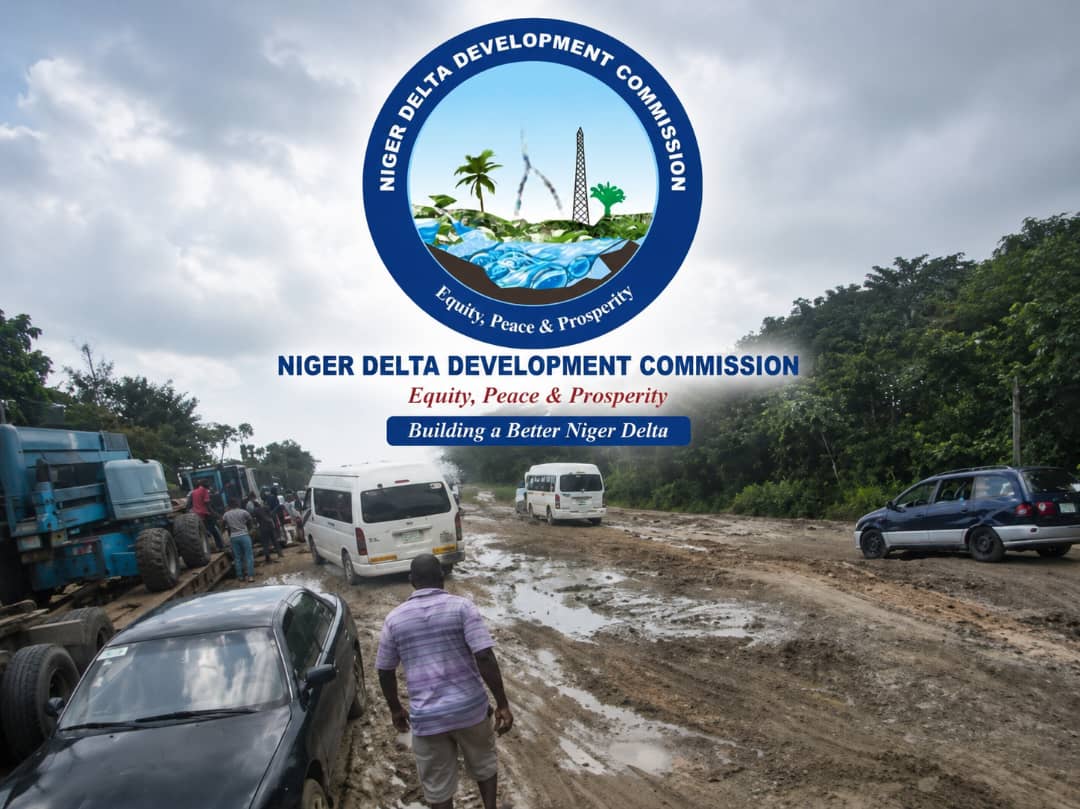
Despite the official flag-off of the emergency repair project, the contractor is yet to meaningfully mobilise to some sections of the road, leaving motorists to continue battling potholes, failed portions, flooding, traffic congestion and other hazards along the critical corridor.
For communities stretching from Warri through Sapele, Mosogar and Oghara, the question is increasingly becoming unavoidable:
What is delaying the commencement of the repairs after the project has already been officially flagged off?
Flag-off raises expectations
The emergency intervention was widely welcomed because the affected road serves as one of Delta State’s most important transportation corridors.
The Warri–Sapele–Mosogar–Oghara route carries thousands of commuters, commercial vehicles, articulated trucks and other road users daily. It also connects major communities and economic centres within Delta and provides an important link to neighbouring states.
Years of deterioration have, however, transformed portions of the road into difficult and hazardous passages.
Motorists have been forced to negotiate potholes and failed sections, while heavy-duty vehicles often compound the problem by placing enormous pressure on already weakened pavement.
The announcement of emergency repairs therefore raised hopes that relief was finally imminent.
But with the contractor yet to fully mobilise, those hopes are increasingly being tested.
Between announcement and action
For residents, the problem is not whether government has recognised the deplorable condition of the road.
It clearly has.
The concern is the apparent gap between government announcement, project flag-off and actual execution.
Road users cannot drive on a flag-off ceremony.
They cannot transport goods on a government announcement.
And potholes do not disappear because a contract has been awarded.
What they need is physical intervention—construction equipment on site, workers repairing failed portions and measurable progress towards restoring the highway.
Payment concerns emerge
Amid the delay, there are emerging concerns over the financial arrangements surrounding some NDDC road projects.
Undisclosed sources familiar with developments around the projects alleged that some contractors may be hesitant to mobilise because of concerns over possible delays in payment, particularly given the huge financial requirements involved in executing the contracts.
The sources suggested that contractors handling major road projects may be reluctant to commit substantial resources to site without greater certainty regarding the funding and payment process.
However, these claims could not be independently verified, and neither the NDDC nor the affected contractors has publicly confirmed that payment concerns are responsible for the reported delay.
The allegation nevertheless raises an important question for the relevant authorities:
If funding arrangements are not sufficiently clear to contractors, how quickly can emergency road repairs actually commence?
The danger of another abandoned project
The concern among residents is understandable.
Delta has witnessed several instances where road projects were announced or awarded, only for implementation to become prolonged by funding challenges, contractual disputes, bureaucratic bottlenecks or changes in contractors.
The last thing residents along the Warri–Sapele–Mosogar–Oghara corridor need is another project that begins with fanfare but ends in abandonment.
The emergency nature of the intervention makes the situation even more urgent.
An emergency repair should ordinarily be followed by rapid mobilisation and visible remedial work.
Where a contractor has not commenced operations, the responsible agencies should urgently establish the reason and resolve whatever obstacle is preventing mobilisation.
The economic cost is mounting
The deteriorating road is already imposing significant costs on residents and businesses.
Transport operators spend more on fuel and vehicle repairs.
Passengers spend longer hours on the road.
Traders and businesses face higher logistics costs.
Farmers transporting produce to markets risk losses because of delays.
Manufacturers and industrial operators also depend on the corridor for the movement of goods and personnel.
The road’s strategic importance means that its deterioration has consequences far beyond the immediate communities through which it passes.
A security concern too
Poor road conditions also create security challenges.
Vehicles forced to slow down around badly damaged portions become more vulnerable, particularly at night.
Congested sections and isolated failed portions can create opportunities for criminal activities.
A functional highway is therefore not simply an economic asset. It is also part of the security infrastructure of the state.
Delta cannot continue to carry the burden
While the Delta State Government has demonstrated willingness to intervene on federal roads where necessary, it cannot permanently substitute for federal agencies responsible for the nation’s federal highway network.
The Federal Ministry of Works, Federal Roads Maintenance Agency (FERMA) and Niger Delta Development Commission (NDDC) must therefore work together to ensure that federal road interventions in Delta are properly funded, executed and maintained.
The state’s interventions should complement federal responsibility, not become a permanent replacement for it.
NDDC needs to address the concerns
The NDDC’s intervention on the road is important and should be supported.
But with public expectations already raised by the flag-off, the commission must now ensure that the project moves decisively from ceremony to construction.
If there are funding, contractual or administrative issues preventing mobilisation, they should be resolved urgently.
If contractors have concerns over payment, the relevant authorities should provide clarity.
If contractors are failing to meet mobilisation requirements, the appropriate contractual measures should be applied.
What should not happen is for residents to remain trapped between a road that is deteriorating and a repair project that exists largely on paper.
Beyond emergency repairs
There is also a need to look beyond temporary intervention.
The recurring failure of major roads in the Niger Delta is linked to heavy traffic, poor drainage, flooding, weak maintenance culture and the challenging terrain.
Consequently, emergency repairs should be accompanied by a comprehensive rehabilitation and maintenance plan.
Drainage must be properly addressed.
Failed pavement structures should be reconstructed rather than repeatedly patched.
Road shoulders must be restored.
And routine maintenance should commence immediately after reconstruction.
Deltans deserve answers
The people living and doing business along the Warri–Sapele–Mosogar–Oghara corridor deserve clear answers.
When will the contractor fully mobilise?
What is responsible for the delay?
Has the project been adequately funded?
Are there contractual or administrative obstacles?
And perhaps most importantly:
When will motorists begin to see actual repairs on the road?
These are legitimate questions in a democracy where public infrastructure projects are funded with public resources.
The NDDC and other relevant federal agencies have an opportunity to demonstrate that the current intervention will be different from previous cycles of promises and delays.
The time for action is now
The people of Delta State are not asking for another ceremony.
They are asking for a road they can safely drive on.
The emergency repairs on the Warri–Sapele–Mosogar–Oghara axis must therefore move beyond the flag-off stage.
Whatever is preventing mobilisation should be identified and resolved immediately.
If the challenge is funding, the funding mechanism should be addressed.
If it is contractual, the contract should be reviewed.
If it is administrative, the bureaucracy should be cut through.
And if there is any failure on the part of the contractor, the appropriate action should be taken.
The road has waited long enough.
For the thousands of Deltans and other Nigerians who depend on the corridor every day, the real measure of government intervention will not be the speeches delivered at the flag-off.
It will be the sight of construction equipment on the road, workers fixing failed sections and motorists once again travelling safely and efficiently.
Until that happens, the question remains: Flag-off without action, what exactly is delaying repairs on Delta’s Warri–Sapele–Oghara federal road?