
News
Warri Ward Delineation Crisis: Protesters Shut Down 13 Oil Flow Stations, Halt 400,000 Barrels Daily Production

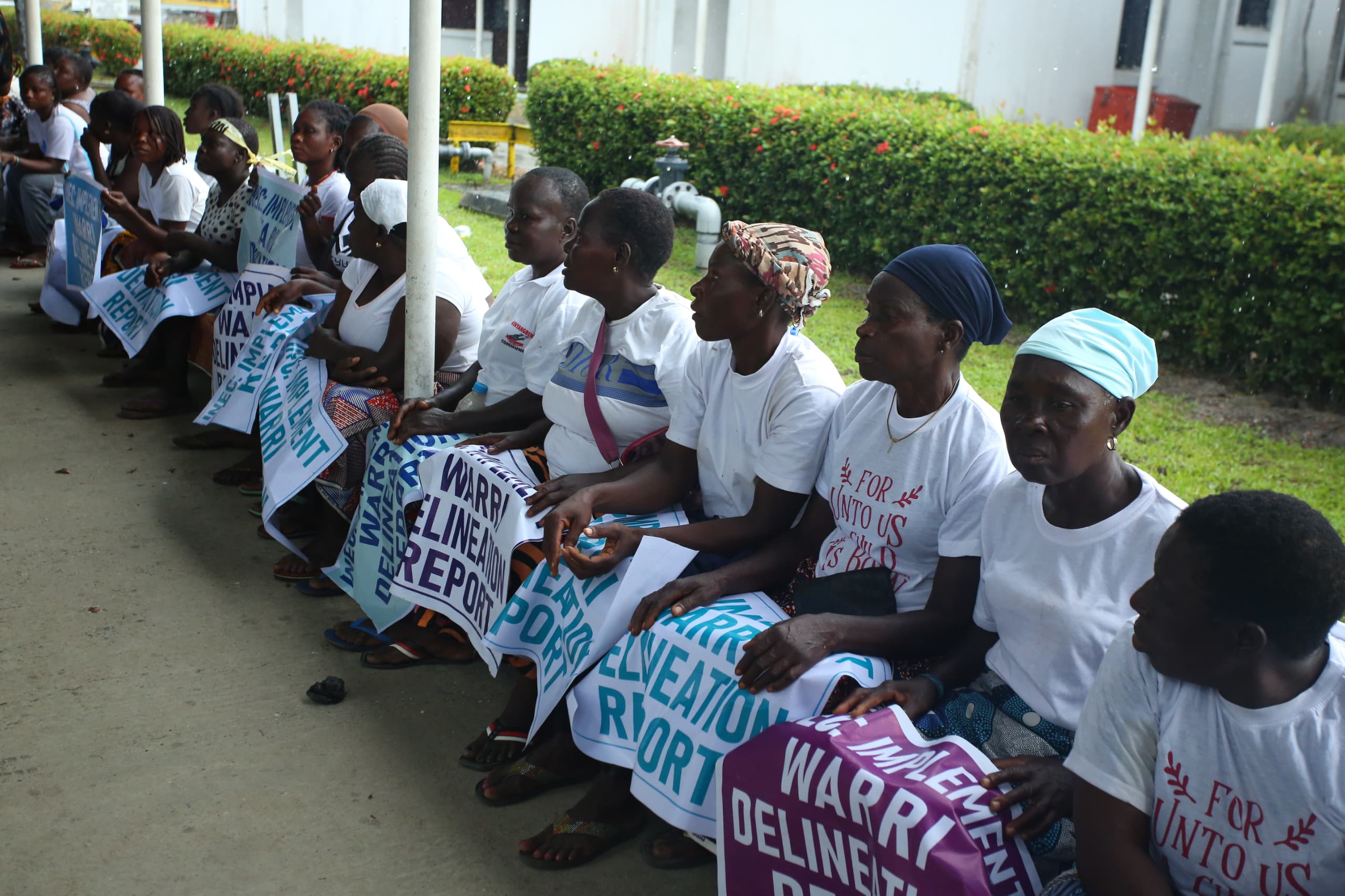
Nigeria’s crude oil production has suffered a major disruption following the shutdown of 13 oil flow stations in Delta State by protesters demanding the implementation of the ward delineation report in the Warri Federal Constituency.
The affected facilities, operated by , and /NECONDE, are estimated to produce about 400,000 barrels of crude oil per day, raising concerns over the potential impact on Nigeria’s economy.
The flow stations affected include Odidi 1 and 2, Batan, Ogbanabou, Jones Creek, Otunana, Egwa 1 and 2, Abiteye, Makaraba, Olero Creek, Dibi Field and Opuekeba.
The facilities were reportedly occupied by hundreds of women and youths from Gbaramatu, Ogbe-Ijoh, Isaba, Egbema and Diebiri Kingdoms in the , which comprises Warri South, Warri South-West and Warri North Local Government Areas.
Sources within the oil industry disclosed that protesters forced workers and security personnel out of the facilities and also blocked the movement of logistics and supplies to the affected companies through the waterways, further crippling operations.
The demonstrators, predominantly of Ijaw extraction, said their action was prompted by the non-implementation of the ward delineation report recently approved.
According to the protesters, there are ongoing efforts by certain interests to frustrate the implementation of the delineation exercise, which they believe was conducted fairly and in compliance with a Supreme Court directive.
The shutdown came less than 24 hours after Ijaw and Urhobo stakeholders in the constituency threatened to halt oil production if INEC failed to implement the final delineation report.
Carrying placards with inscriptions such as “INEC: Implement Warri Delineation Report,” “Court Ordered Judgment on Wards and Polling Units Delineation,” and “No Implementation, No Production,” the protesters vowed to sustain the action until the report is fully implemented.
Speaking on behalf of the demonstrators, Chief Mrs. Maria Ebike accused INEC of delaying implementation despite concluding consultations and submitting its recommendations.
“We have waited patiently for the authorities to do the right thing. Since our voices have continued to be ignored, we have no option but to demand justice through peaceful protest. No implementation of the ward delineation, no oil production,” she said.
Ebike further alleged that influential interests within the Presidency were working behind the scenes to frustrate the implementation of the electoral body’s report.
The controversy stems from a 2022 judgment of the , which ordered a fresh ward and polling unit delineation exercise in Warri Federal Constituency.
Following the judgment, INEC conducted the exercise and presented its final report to stakeholders in Asaba on May 20, 2026.
However, the proposed implementation has heightened tensions among Ijaw, Urhobo and Itsekiri communities, with Ijaw and Urhobo stakeholders accusing some Itsekiri interests of lobbying influential government officials, including those within the Presidency and the Office of the National Security Adviser, to stall the process.
As tensions continue to rise, industry observers warn that prolonged disruption of oil production in the area could have serious implications for Nigeria’s crude oil output and revenue generation.