
Opinion
Rivers Crisis: When Godfather Politics Threatens Democracy

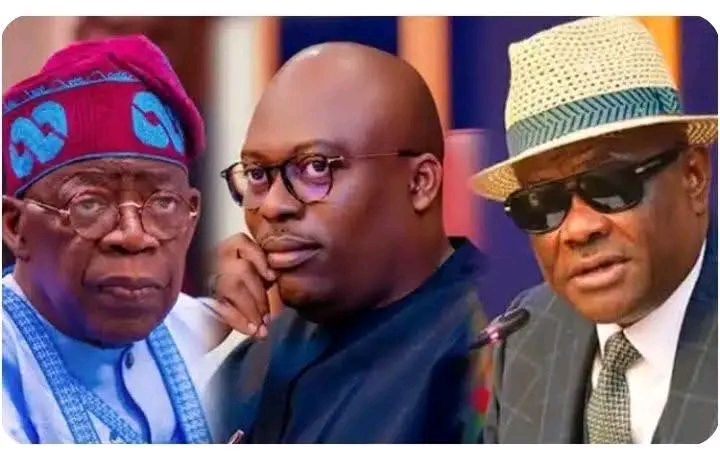
The impeachment notice served on Rivers State Governor, Siminalayi Fubara, is not merely a legislative action; it is a political message. And that message is clear: in parts of Nigeria’s democracy, power still flows from godfathers, not the ballot box.
While impeachment is constitutionally recognised, its repeated deployment as a tool of political enforcement raises troubling questions about the sincerity of democratic governance in Nigeria.
This Is Not About Gross Misconduct
If impeachment were truly about accountability, Nigerians would expect clear, weighty allegations backed by transparent investigations. What the Rivers people have witnessed instead is a familiar pattern; political disagreement dressed up as constitutional discipline.
What history teaches us
Impeachment notices are issued in the heat of power struggles, governance suffers and democracy weakens. Rivers State now appears headed down that well-worn path.
The Real Offence: Independence
Governor Fubara’s greatest “crime” may not be misgovernance, but independence. Having emerged from the political structure of his predecessor, expectations of loyalty were inevitable. Yet no elected governor signs away his constitutional authority as part of a succession deal, especially one never written, never debated, and never endorsed by the people.
Nigeria’s Constitution does not recognise political sponsorship as a condition for governance. The mandate belongs to the electorate, not to former office holders, no matter how influential.
Rivers People Are the Casualties
Political elites may trade threats and counter-threats, but it is ordinary Rivers citizens who pay the price.
When a governor governs under siege:
Development slows, Investors retreat,
Public servants become uncertain, youth are mobilised for political ends
Rivers State, already grappling with security and economic challenges, can ill afford elite power games masquerading as constitutional processes.
Nigeria Has Been Here Before and With Costly Results
From Oyo to Plateau, Ekiti to Bayelsa, Nigeria’s history is littered with impeachments later overturned by courts. The pattern is consistent: godfather-instigated removals weaken institutions, polarise societies, and ultimately fail judicial scrutiny.
What never gets overturned, however, is the damage done to public trust.
Tinubu Must Choose Institutions Over Interests
President Bola Ahmed Tinubu stands at a crossroads. As a beneficiary of political structures himself, he understands power dynamics. But as President, his higher duty is to the Constitution.
Silence or selective neutrality would be interpreted as endorsement. And endorsement would signal that political godfatherism remains a legitimate instrument of control in Nigeria’s democracy.
The President must:
1. Insist on strict constitutional compliance
2. Encourage genuine political mediation
3. Prevent the misuse of state institutions for personal vendettas
Stability in Rivers is not just a state concern; it is a national economic and democratic imperative.
Democracy Cannot Thrive Under Remote Control
A democracy where former governors rule by proxy is no democracy at all. If elected leaders are punished for asserting autonomy, future governors will learn the wrong lesson: obedience matters more than performance.
Rivers State is not just testing the limits of impeachment, it is testing Nigeria’s commitment to democratic evolution.
Impeachment should be a shield for democracy, not a sword for political control. If Nigeria fails to draw this line clearly, elections risk becoming ceremonial, and governance a mere extension of backstage agreements.
Rivers deserves better. Nigeria demands better.
Kparobo Ehvwubare is an investigative journalist and good governance advocate writes from Delta State.