
Opinion
Flyovers as Economic Lifelines: Lessons from PTI, Enerhen, Otovwodo and Agbor and The Need for Replication in Oghara

 Gov. Sheriff Oborevweri.
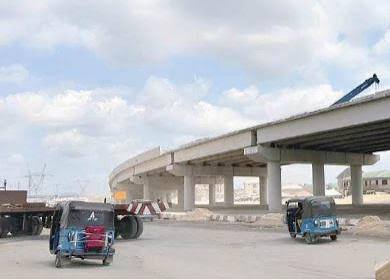
Across Delta State, flyover bridges have gradually evolved from mere traffic solutions into powerful symbols of economic foresight. From PTI Junction in Effurun, Enerhen in Warri, recent of flyovers approvals to Otovwodo in Ughelli, to Agbor metropolis, these massive infrastructure projects have redefined urban movement, reduced road fatalities, and already unlocked new layers of economic activity.
As these flyovers continue to shape the state’s transport architecture, they also offer a compelling lesson: where mobility improves, prosperity follows.
This lesson presents a strong case for Governor Sheriff Oborevwori to extend similar interventions to Oghara in Ethiope West Local Government Area, a strategic community whose economic and institutional relevance far outweighs its current infrastructure support.
How Flyovers Are Rewriting Delta’s Urban Economy
The PTI Flyover at Effurun, sitting at one of the busiest junctions in Delta State, has significantly reduced traffic bottlenecks that once crippled commercial activities linking Warri, Effurun, Ughelli, and Sapele. With smoother vehicular movement, businesses now operate with greater predictability, logistics costs leaping towards drop in price, and road safety has improved for both motorists and pedestrians.
Similarly, the Enerhen Flyover has helped decongest inner Warri, allowing markets, transport operators, and small businesses to thrive in an environment previously marked by gridlock and frequent accidents.
In Ughelli, the Otovwodo Flyover would no doubt provide critical economic artery, reconnecting commercial zones and easing daily movement within Delta Central. Agbor’s flyover, on its part, upon completion would enhance inter-state connectivity, supporting trade flows between Delta and neighbouring states while encouraging urban expansion and real estate development.
Collectively, these projects demonstrate that flyovers are not just traffic solutions but they are economic multipliers.
The Hidden Economic Gains of Flyover Infrastructure
The economic benefits of these flyovers are both direct and indirect. They include:
Reduced travel time and fuel costs, boosting productivity
Improved road safety, lowering accident-related economic losses
Increased commercial activities around flyover corridors
Appreciation of land and property values
Enhanced investor confidence in urban centres
Better emergency response times for security and healthcare services
Over time, these gains translate into stronger local economies and higher internally generated revenue for the state.
Oghara: A Strategic Community Begging for Flyover
Despite being strategically located along the East–West Road, Oghara remains without a flyover at its busiest point, the Oghara Express Junction. This omission is striking, given the concentration of major institutions within the community.
Oghara hosts an extraordinary mix of public and private establishments, including:
Delta State Polytechnic, Otefe-Oghara
Delta State University Teaching Hospital (DELSUTH), Oghara
Nigerian Navy Logistics Command, Oghara
Headquarters of MOPOL 51
Western Delta University, Oghara
Several private schools, hospitals, markets, and residential developments.
Daily, thousands of students, lecturers, medical professionals, patients, security personnel, traders, and commuters converge at Oghara Express Junction, attempting to cross or merge onto the dual carriage East–West Road, one of the busiest highways in the Niger Delta.
A Junction of Danger and Lost Potential
The absence of a flyover at Oghara Express Junction has turned the area into an accident-prone corridor. Almost daily, pedestrians risk their lives crossing the high-speed highway, while vehicles struggle to navigate uncontrolled intersections.
The consequences are severe: loss of lives, damage to vehicles, delayed access to healthcare, disruption of academic activities, and mounting social trauma. These are costs that do not always appear in government budgets but are borne heavily by families and the local economy. Moreover, the unsafe environment discourages investment, despite Oghara’s immense institutional and demographic advantage.
Why Oghara Needs a Flyover
Replicating the flyover model in Oghara would deliver immediate and long-term dividends.
Economically, it would:
Improve access to educational and medical institutions, Stimulate businesses such as hostels, retail outlets, hospitality, and transport services, Boost property development and land values, Support smoother traffic flow along the East–West Road.
Socially and in terms of safety, it would:
Drastically reduce accidents and fatalities, Provide safe pedestrian movement for students, patients, and residents, Enhance response time for naval and police operations.
Aligning with Governor Oborevwori’s Development Vision
Governor Sheriff Oborevwori’s MORE Agenda places emphasis on Meaningful development, Opportunities for all, Realistic reforms, and Enhanced peace and security. Extending flyover infrastructure to Oghara aligns perfectly with these pillars.
Just as PTI, Enerhen, Otovwodo, and Agbor flyovers would and already redefining their host communities, an Oghara flyover would signal inclusive development, one that recognises strategic value, not just urban size.
From Success Stories to Statewide Strategy
Delta State’s experience has shown that flyovers are long-term investments with compounding economic returns. The success of existing projects should therefore evolve into a deliberate policy of replication in high-impact locations.
Oghara Express Junction meets every criterion: traffic volume, institutional concentration, safety concerns, and economic potential. For a community that plays host to some of Delta State’s most critical institutions, a flyover is not merely desirable, it is inevitable.
As the state builds on the successes of PTI, Enerhen, and subsequent award of Otovwodo, and Agbor flyovers , the next logical step in Delta’s infrastructure journey leads unmistakably to Oghara.
Robo Bare, is a trained Journalist and Good Governance Advocate. Could be reach on omeafrica3@gmail.com.