
Crime
A General’s Death and the Questions Nigeria Cannot Ignore

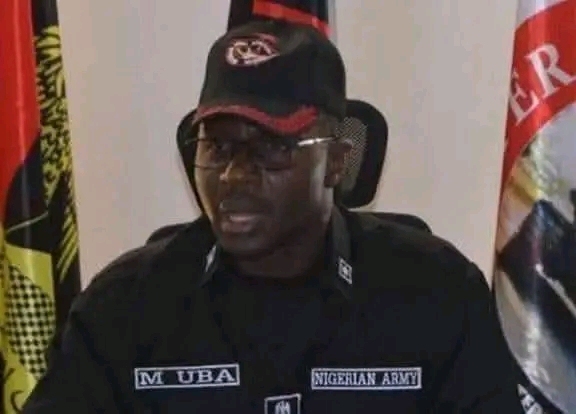
By Abu Sidiq
The killing of Brigadier General M Uba by ISWAP is not something Nigeria can sweep aside. It is a blunt reminder that the country’s security architecture has weaknesses far deeper than official statements admit. His death exposed a chain of failures that should trouble anyone who cares about the safety of the men and women fighting on the front lines.
In the hours after the ambush, confusion dominated the narrative. Some reports even claimed he had been captured alive. That turned out to be false, but the real story is no less disturbing. General Uba was in active communication with colleagues as events unfolded. He shared his location. He made a video call asking for support. He was fighting, coordinating, and trying to hold the situation together. Yet by the time reinforcements arrived, he had vanished. Not long after, ISWAP released its own announcement that it had killed a senior officer in the same area.
A detail that cannot be ignored is that he reportedly communicated through WhatsApp rather than a secure military channel. That alone says a lot. When a senior officer in a live combat situation has to rely on an ordinary messaging app, it shows how vulnerable our forces are in a war where information is as dangerous as firepower. Insurgent groups monitor, intercept, and react quickly. Improvised communication leaves officers exposed.
This does not suggest betrayal. It points to something just as dangerous: structural gaps. Insurgents are adapting faster than the systems designed to confront them. When communications are easily compromised, when tools are outdated, and when protocols lag behind enemy tactics, even the most courageous officers can be placed in unwinnable positions.
General Uba’s death raises questions that cannot be brushed aside. If a senior commander can be tracked, located, and neutralised so quickly, what does that say about the protection available to junior officers and civilians in vulnerable communities? How many more are operating under similar risks without the right equipment, technology, or support?
This incident shows clearly that protecting troops today requires more than firepower. It requires secure communication, real time intelligence, and systems that match the sophistication of the threat. Anything less leaves officers exposed and operations compromised before they even begin.
The military owes the country clarity. Not speculation. Not secrecy. Clear answers about what failed and what will be fixed. Nigerians are entitled to know whether the issue was interception, delay, or outdated tools. This is not about pointing fingers. It is about preventing the next tragedy.
Brigadier General M Uba paid the highest price in service to Nigeria. Honouring him means ensuring the system that failed him is rebuilt. Officers deserve proper tools. Citizens deserve a force that is protected as much as it protects others. Nigeria deserves a security strategy that sees the enemy clearly and responds with equal sophistication.
His death must not become another line in a long list of avoidable losses. It should be a turning point. Nigeria cannot afford another General Uba.